Pre-story
Where do I even begin? Honestly, I’m not entirely sure. The PCT has been on my mind since 2017, back when I was living in Canada. 9 years ago. Time flies, doesn’t it? But maybe that’s exactly the point — making those years count, making sure they pass in a way you actually use and appreciate.
The PCT was my first long thru-hike, my “baby” in a way. This is where I decided that the outdoors life was the life for me. This is where I chose to stay active, to keep moving, to keep seeking new paths—literally and figuratively. Everything that’s come after, in Patagonia and beyond, somehow traces back to this first big adventure.
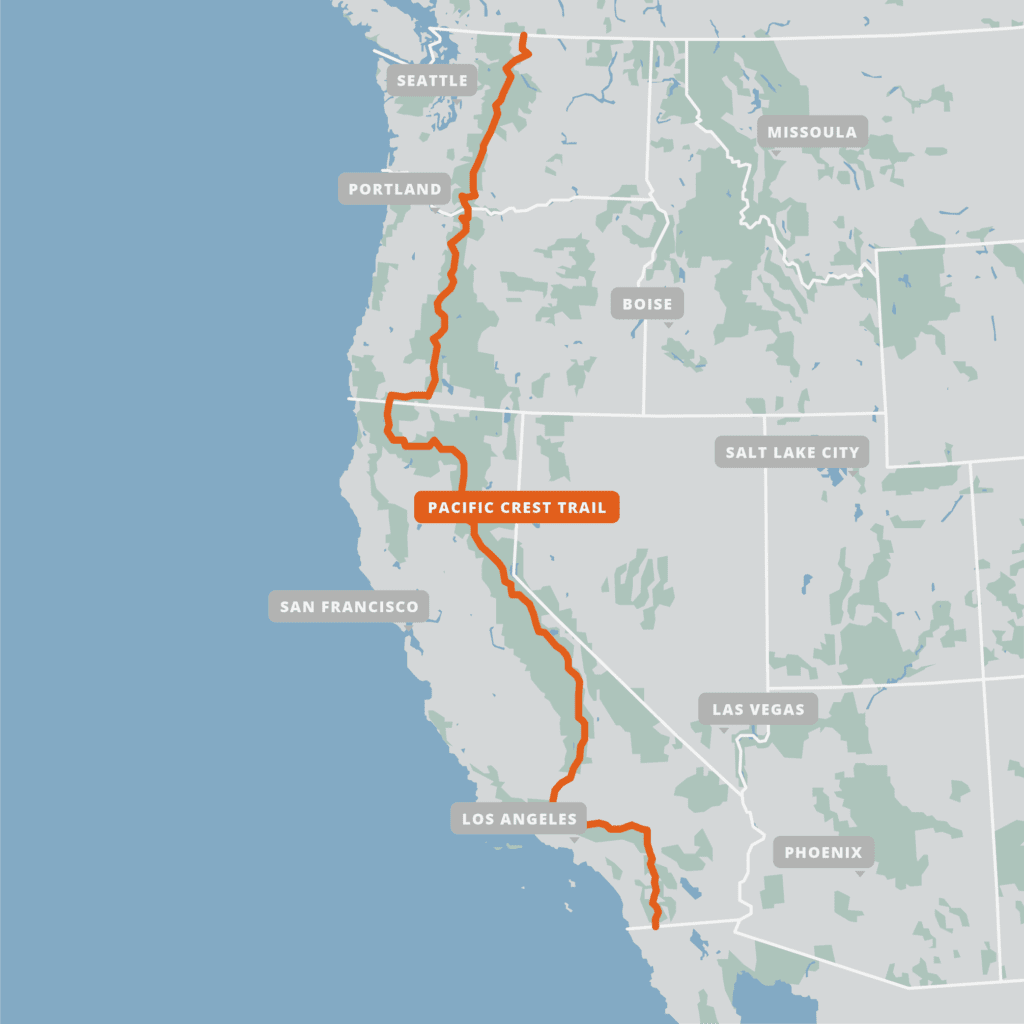
When I was in Canada, my friend mentioned that there is this hike that goes along the United States. My first thought was, wow, that’s impossible. You go through the mountains, you go through the desert, you go through the valleys. How is it possible to do that with just one backpack?
So my first reaction was no. But what happened next actually sparked my curiosity. It was the first time I heard about a challenge — a challenge that seemed challenging enough for me that I would actually take it on. I was extremely excited, and scared as well. Signing up for a new challenge, in a sense, meant that I might fail, but at the same time, it felt like a challenge that matched my ambition.
You know, I like ambitious goals, but at the same time, I felt like I wasn’t really ready to jump on the PCT straight away, especially with a bachelor’s degree ahead of me. So I decided to test my waters first.
The same friend had mentioned the El Camino de Santiago in Spain. So, in 2019, I hiked it. And one of those days — I think it was day 11 — I hiked 50 kilometers, which is 32 miles.
At that point, I thought, if I can hike 50 kilometers and not get beaten up, if my body holds up, then I can do the PCT.
And just like that, in the middle of August 2019, I decided that once I finished my bachelor’s degree, I was going to tackle the PCT.
March 27, 2022
Fast forward to 2022
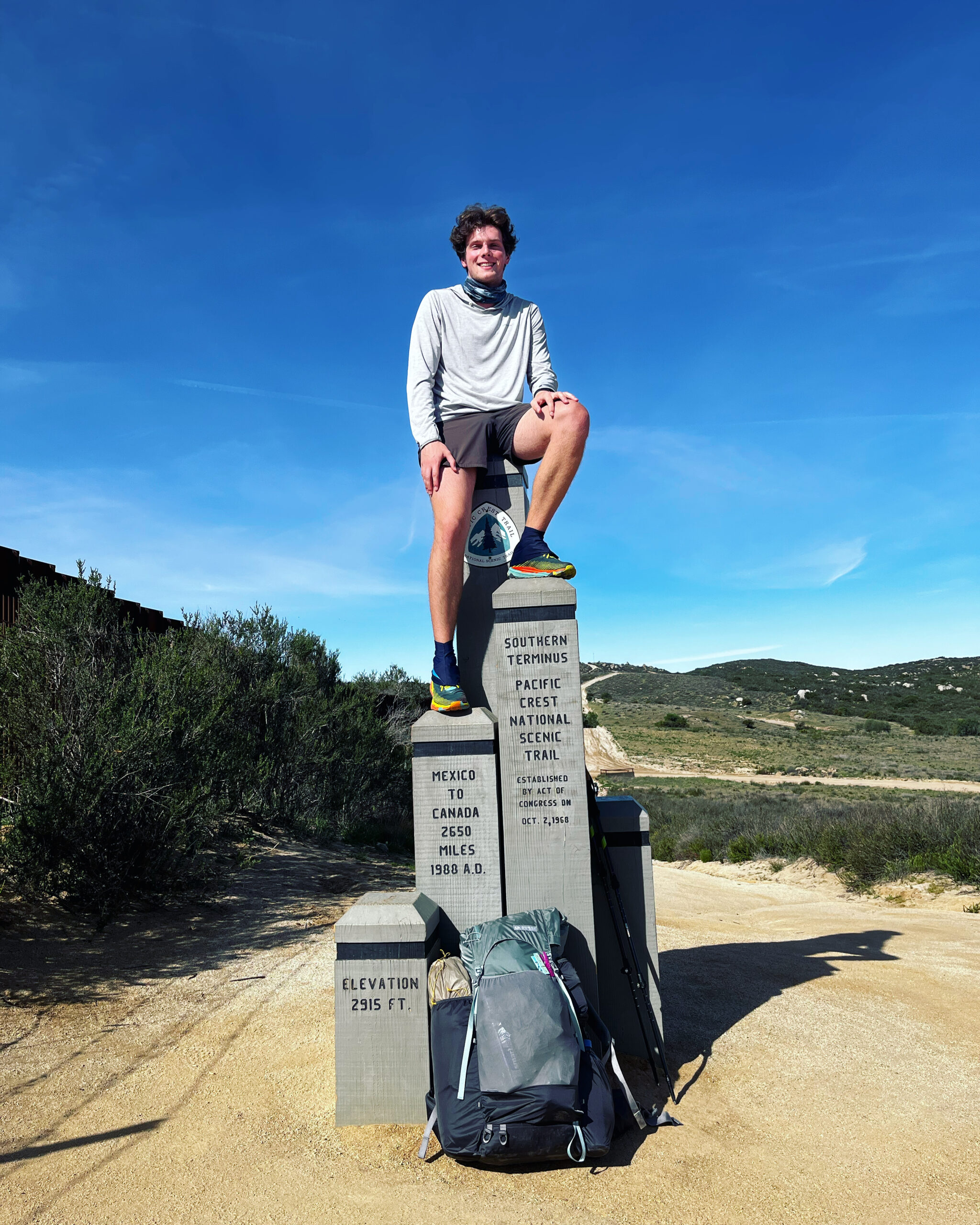
And that’s exactly how it went. I finished my bachelor’s degree. I worked out for eight months to save some money. And here I am: March 27th, Southern terminus, Mexico to Canada, 4200-4300 km ahead of me.
Mexico to Canada. Me. Sitting at the terminus, smiling, not even knowing what I’m setting myself up for. But at the same time… feeling amazing. Because this — this is a new beginning. This is my bravest moment yet. I’m ready to see how it’s going to shape the future.
Rules before the trip
Before the trip, I set a few rules for myself.
First and foremost: I cannot quit today.
I could quit any other day — but not today. And then tomorrow becomes today. And just like that, I can never quit.
The only way this trip would end early was if I was injured beyond the point where I couldn’t move. If I break my leg, naturally, I can’t continue. If I break my arm… I can probably still keep moving. I set these boundaries before the trip so that if something came up later, I’d already know where I stand.
Another rule was emotional: do not quit on a bad day. If I felt low, I would just stop. Sit. Wait. Sleep. Take a rest day in town. But not quit.
I already had my return tickets. I had four and a half — five months in the U.S. I wasn’t going to buy new ones. That would be inefficient and stupid. Staying in the U.S. without hiking would be expensive. Working would be illegal, so that wasn’t an option either.
So if I decided to quit, I’d have two choices: figure out something illegal or expensive… I understood that basically hiking was my only option.
So there was no way out. I knew from the start that I was only moving forward.
The start
I walked for the first hour, and then I saw the first sign: 3 miles from Mexico, 2,647 miles to Canada. It made things feel very real, very long — but at the same time, I remember thinking: yeah, I have time.
The first day was mostly about thinking. What am I actually doing? How long is this really going to last? Just walking and letting those thoughts come and go.
Most of my gear had been shipped to the U.S. before the trip, which meant I pitched my tent for the first time the day before starting. Same with packing my backpack properly. I wouldn’t recommend this approach — it worked for me, but it could easily backfire in a big way.
Oh yeah, on day one I almost touched poison ivy. I’d read about it online but had never seen it in person. I thought, sheesh—it’s day one and I’m already in danger. I wouldn’t have noticed it myself, but I was close to a stream and there were some other people there who warned me. Thanks to them, I didn’t start my hike with massive rashes.
Still, I felt good. Happy with the unknown, and excited to see what was coming next.
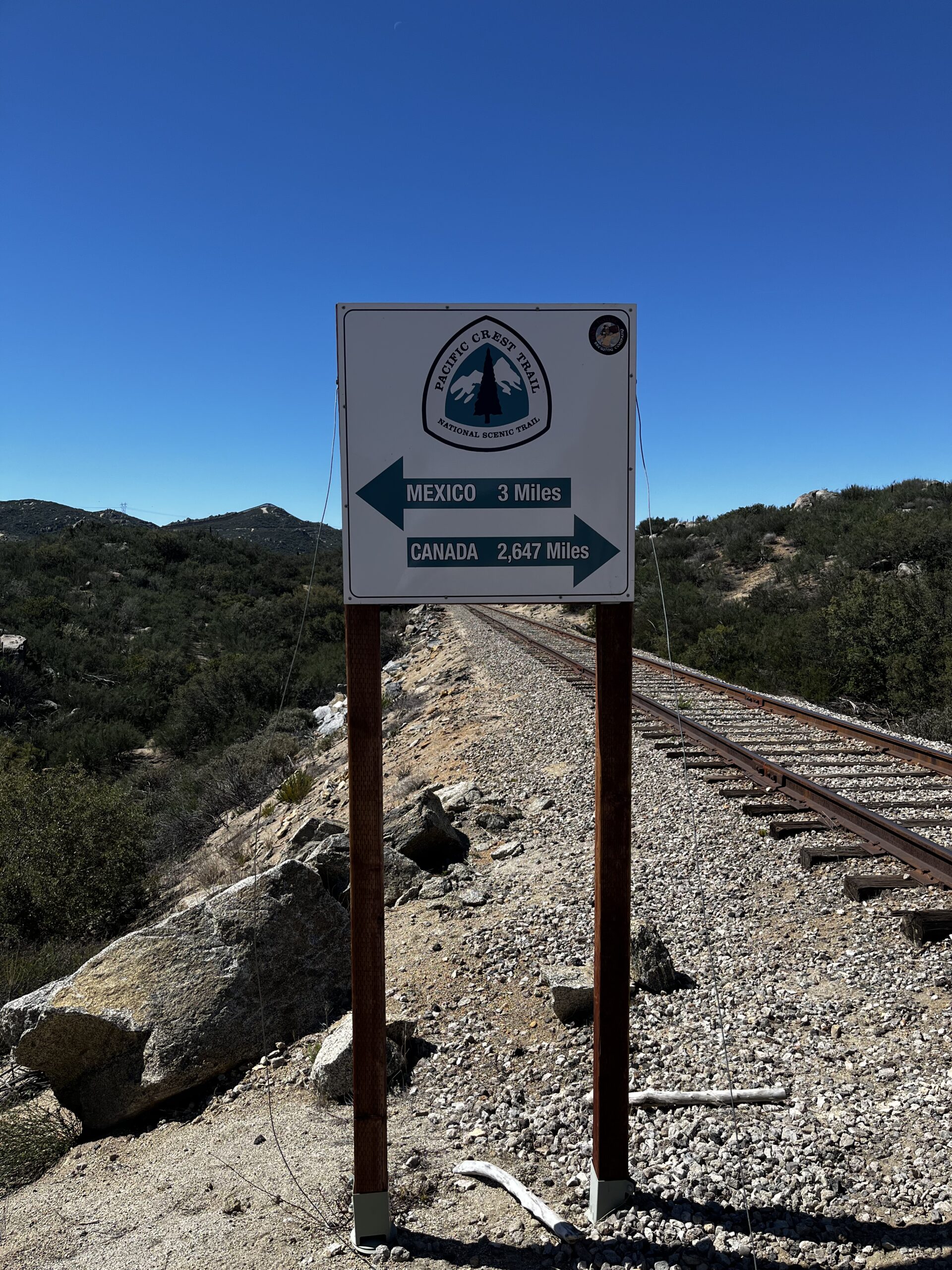
That desired Canadian border is still far away
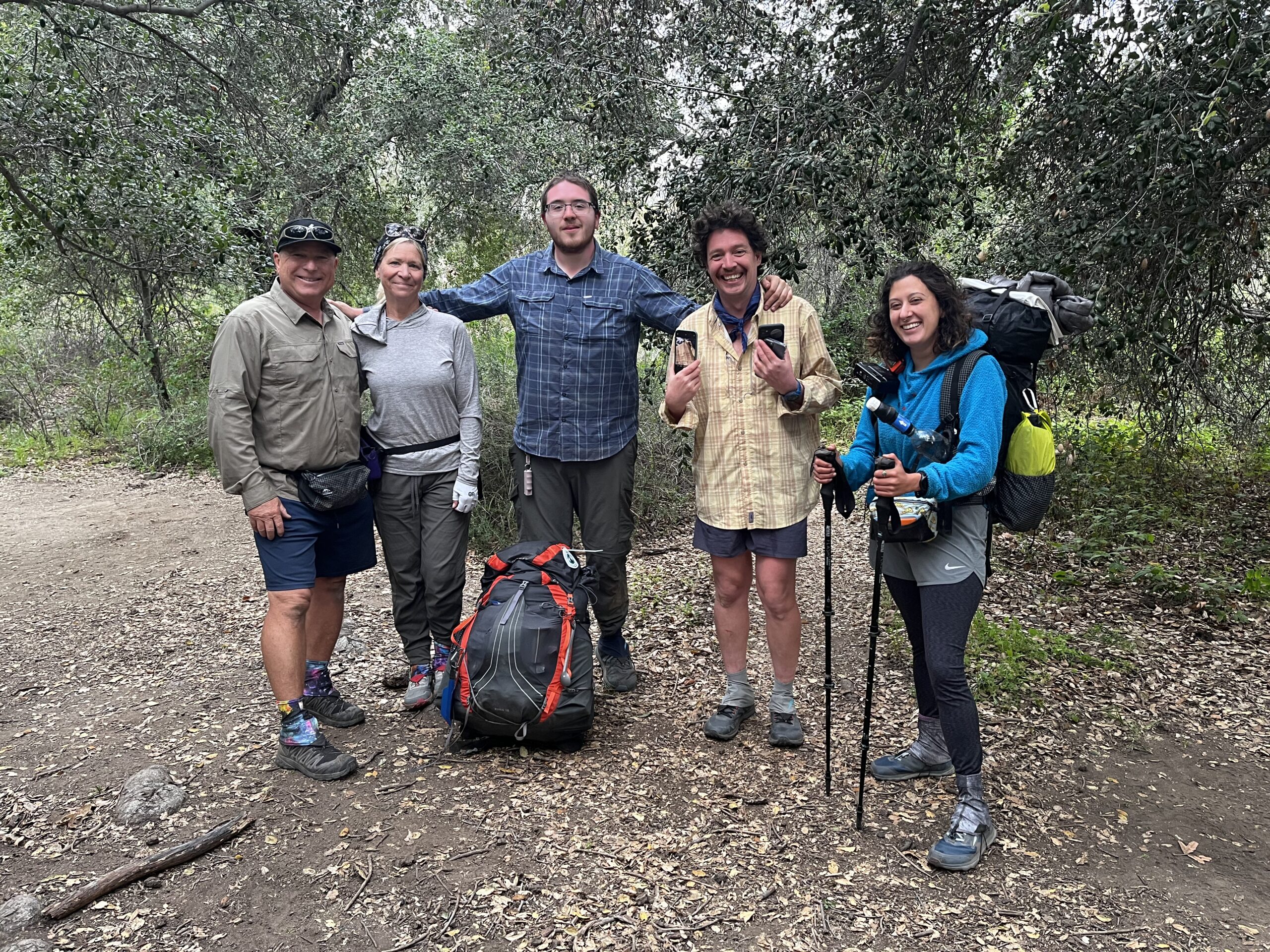
These are the people I camped with the first night, never seen them again
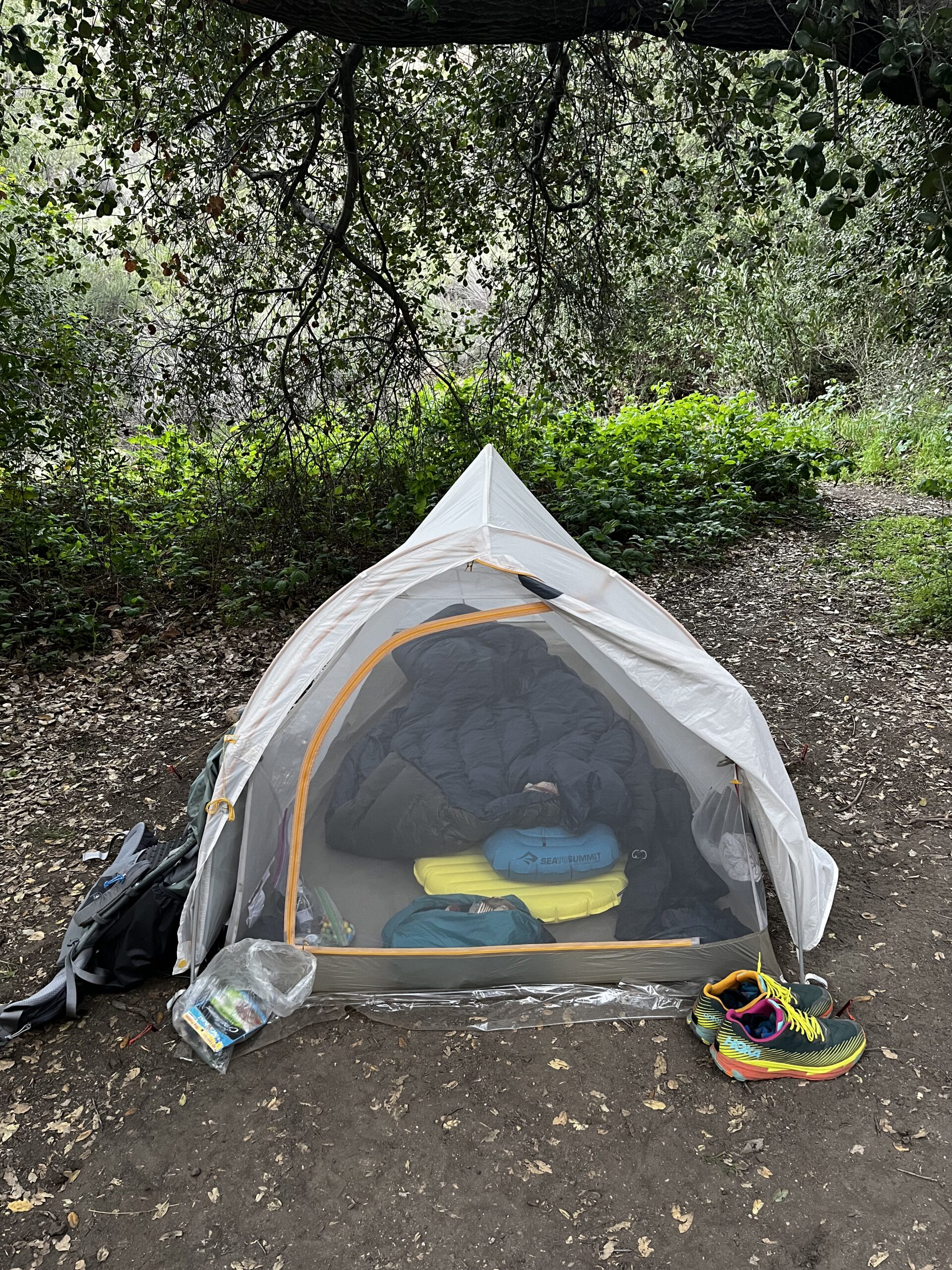
First night on the PCT – had to take a picture of it
The reality
Ah, surely. I imagined the desert being hot and dry, but starting in late March meant anything could happen. And of course, it did — rain, snow, and weather that didn’t really fit the picture I had in my head.
The first days were slow. I was stuck in my tent from around 4 p.m. on day 2, just waiting for the morning, waiting for the rain to stop. There wasn’t much to do except eat, listen to the weather, and let my thoughts wander. I played a lot of Sudoku.
Somewhere between my very questionable meals, I started asking myself what I’d actually signed up for. Not in a dramatic way — more like a quiet, honest check-in. And then, eventually, morning came.
That was my dinner, and the views in the tent, really makes you question
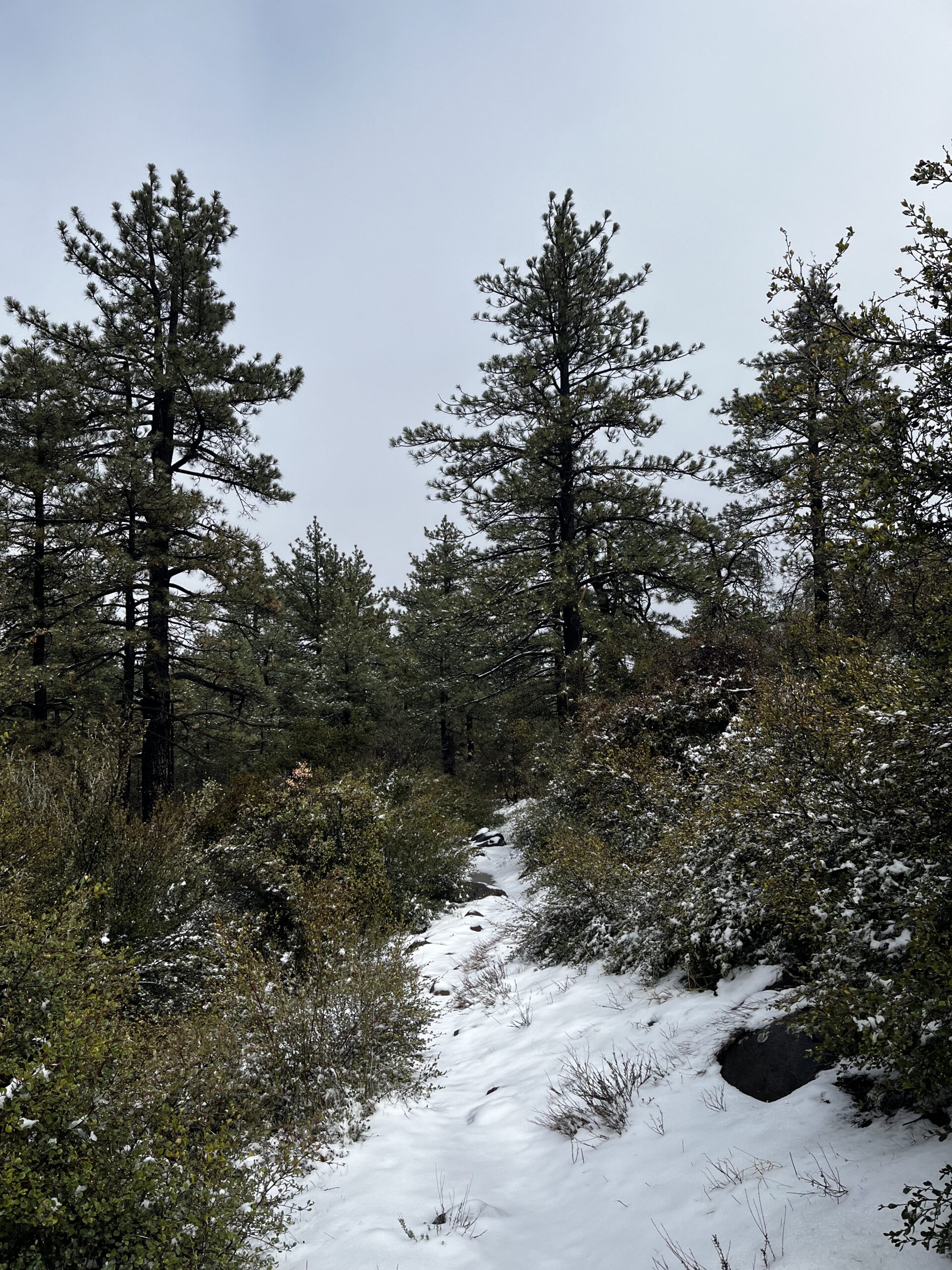
And… we are in snow
After the snow, the weather slowly settled. The desert finally started to feel like a desert — heat during the day, patches of shade, that dry, open feeling. It was exciting to be there, to actually begin finding the rhythm of the first days. Everything was still new, still a lot, but in a good way.
The sunsets were unreal. Light hitting the hills from the other side, everything glowing for a few quiet minutes. Those moments made the tougher parts feel small. I really enjoyed that.
It was also the first time I had to properly filter water — not as a “just in case”, but because there was no other option. Standing there, looking at it, thinking: yeah, I’m definitely not drinking this unfiltered. A small reality check, and another reminder that this was real now.
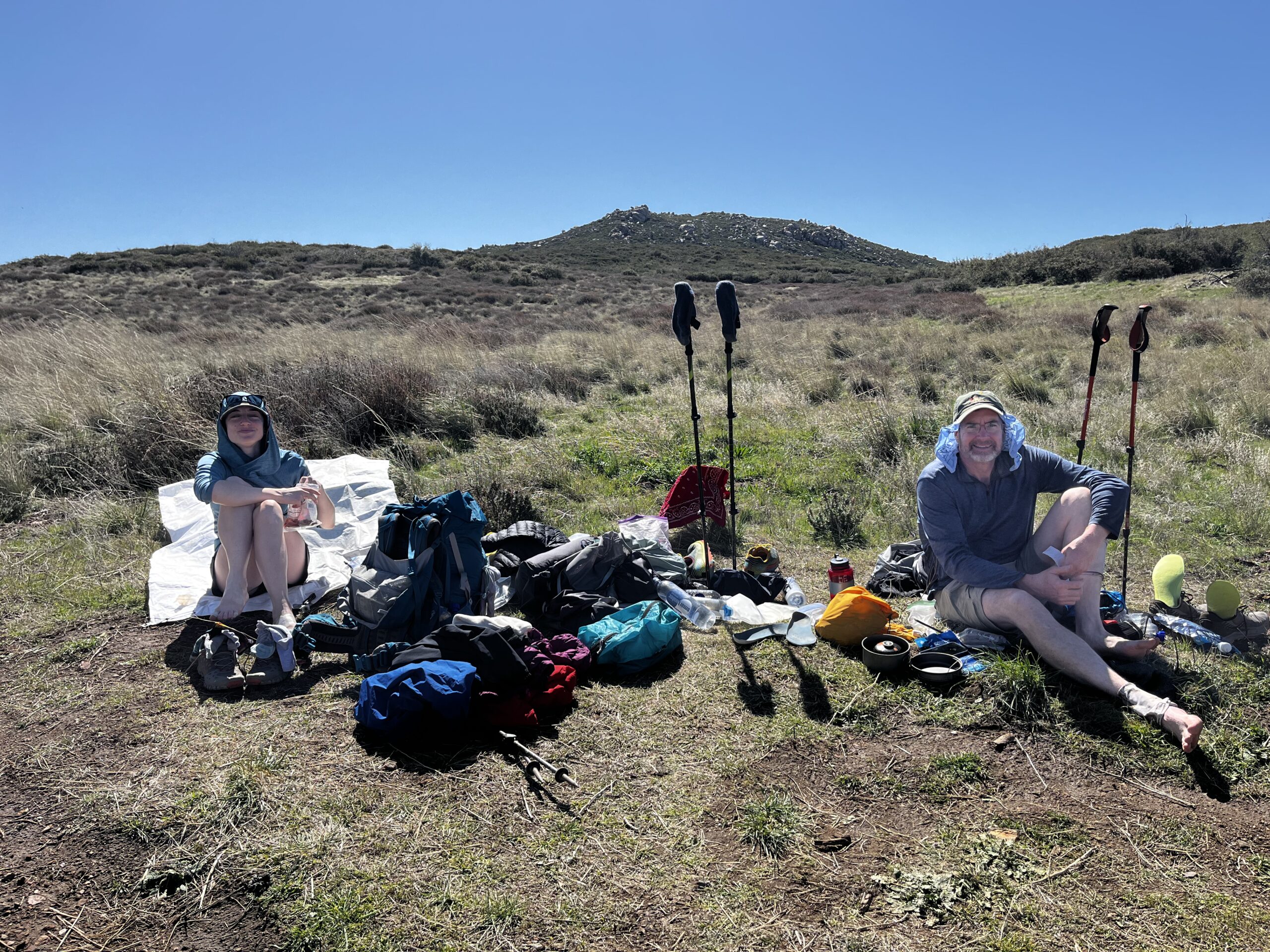
Hanging out while drying our stuff from the day/night before
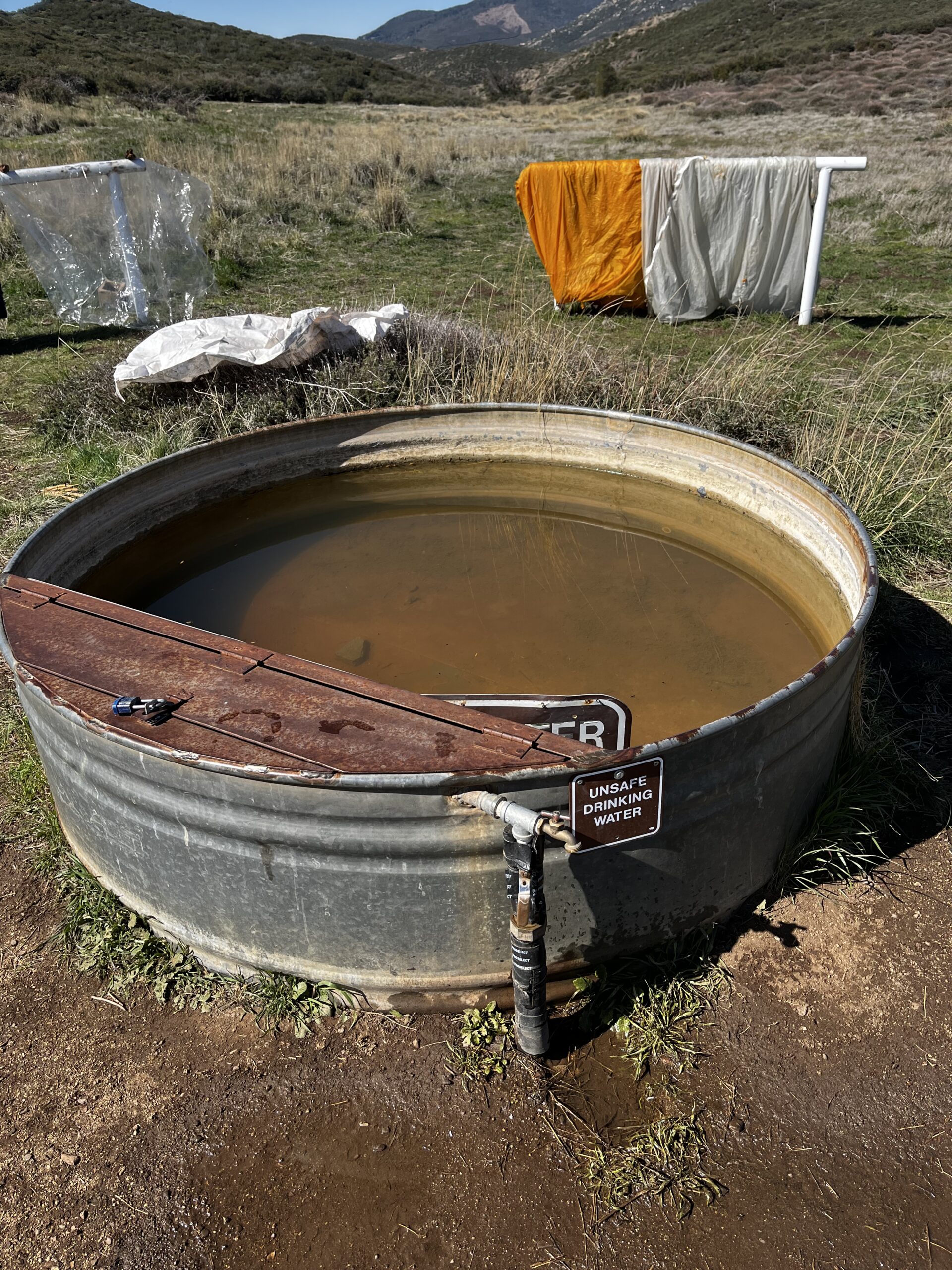
Probably for cows, definitely for the PCT thruhikers
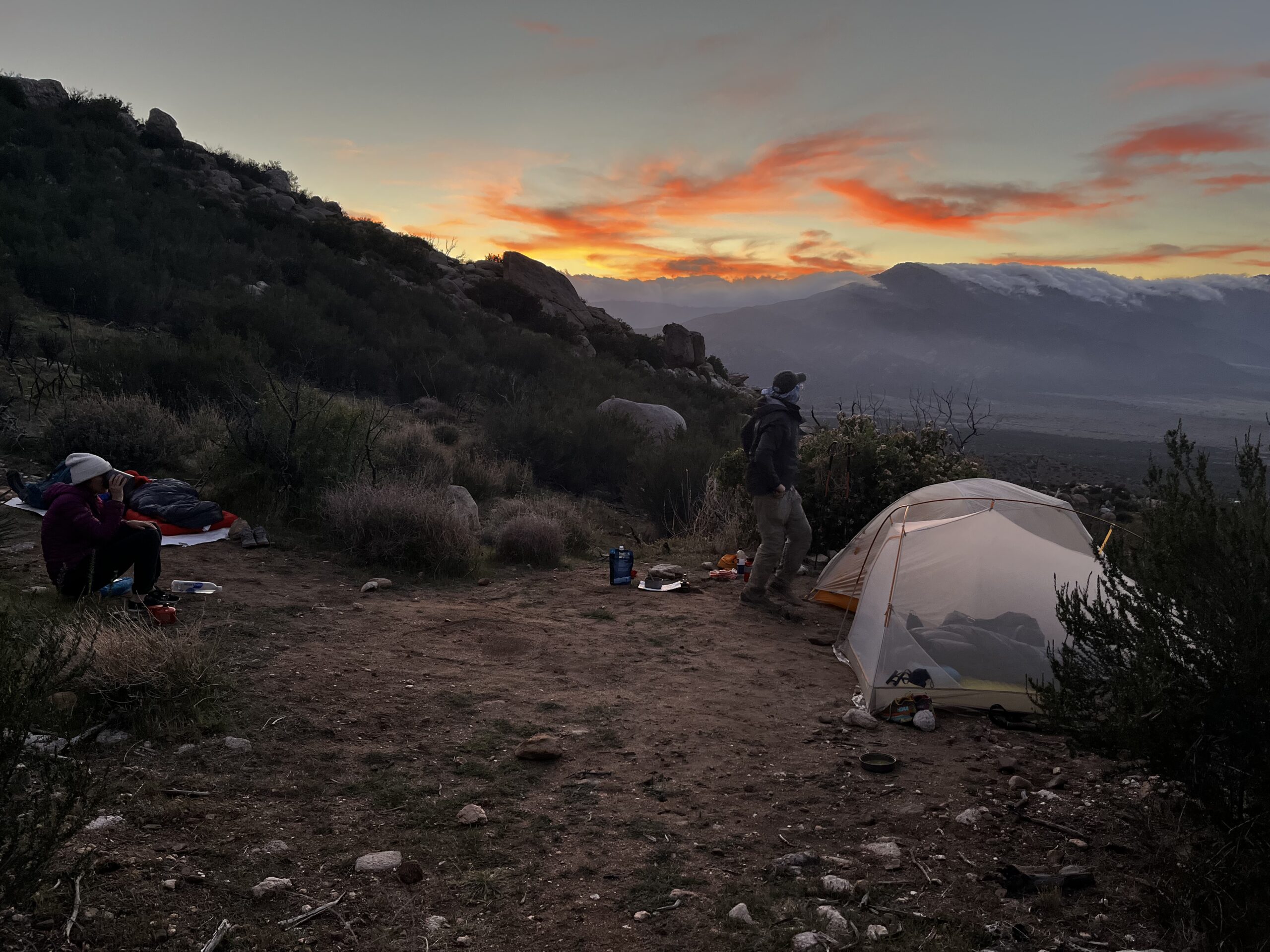
Having dinner, chilling outside, I kind of get this lifestyle
I also learned that not testing your gear properly is a bad idea.
One evening I didn’t bother cleaning the ground under my tent. Big mistake. Somehow, during the night, I managed to put a solid one-inch hole into my sleeping pad. No idea how exactly it happened — I just remember lying there, awake, staring at the ceiling of the tent, replaying the moment over and over and questioning my own stupidity.
There wasn’t much to do about it. I slept through the night, but the damage was done. A $150 mistake, paid in full for something that was completely avoidable. Lesson learned — one I definitely won’t repeat. Still felt like an idiot, though. With the help of other hikes, the hole was patched up (it took me 4 tries though).
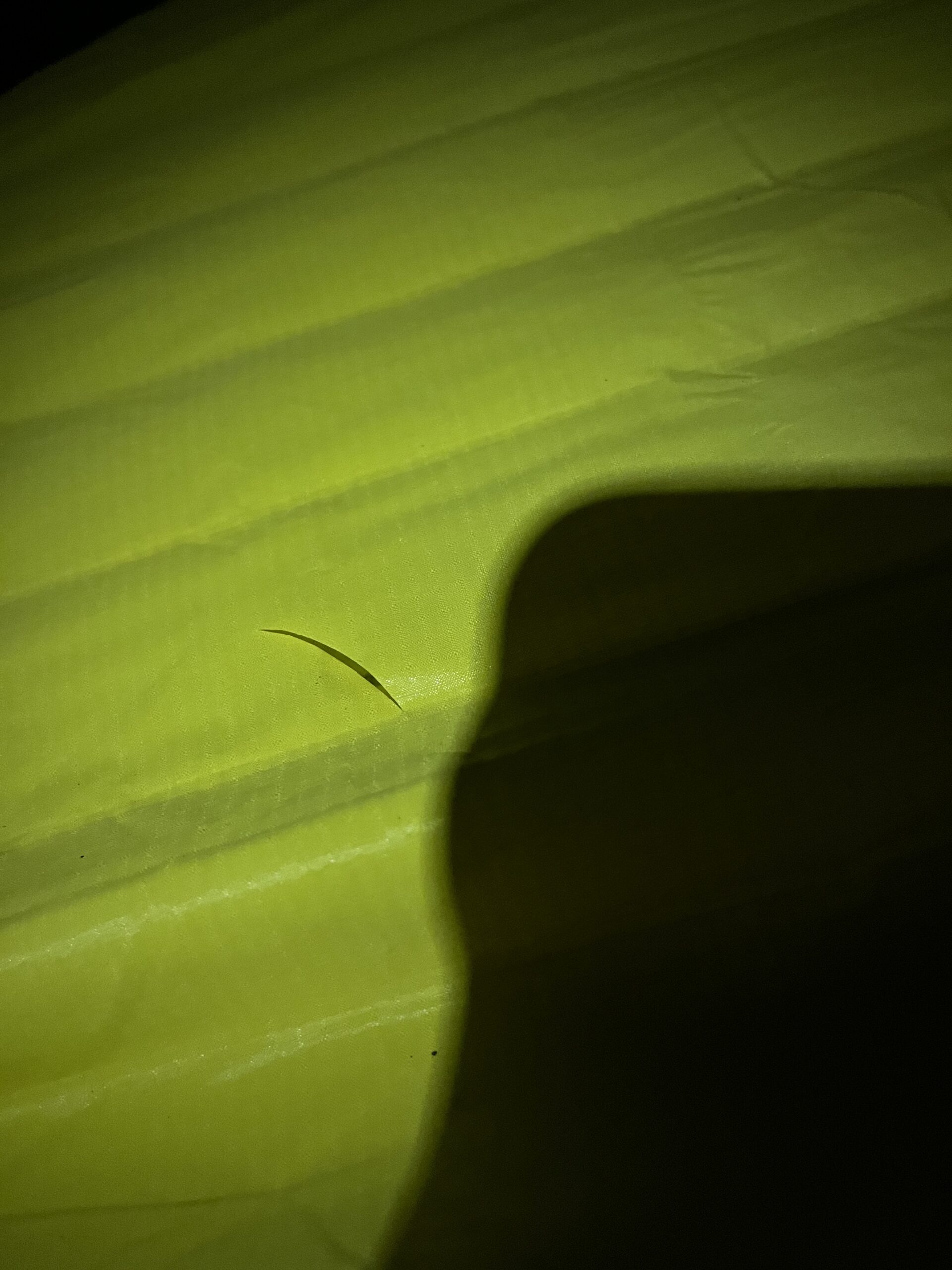
Good luck fixing that at night
The rhythm
Things started to settle a bit. Walking felt smoother, and I could feel some rhythm coming back. I wanted to enjoy the trail more and stress less, even though my head was still busy with other thoughts. Physically, I was fine — no complaints — but mentally, some days just don’t click. It felt more like work than walking, like I’d stepped out of myself. Mel (a 50yo guy whom we hiked kind of together for the first days) was solid, though, keeping the energy up when I needed it.
The next day was calm. Good weather, not too hot. Everything felt a bit repetitive, but that’s part of it — not every day will be special. I was happy to meet Amy and Austin; they shared some Sierra tips, which was both useful and reassuring.
There’s no rush out here. I want to slow down mentally and actually enjoy the trail — to be on it, not just moving through it.
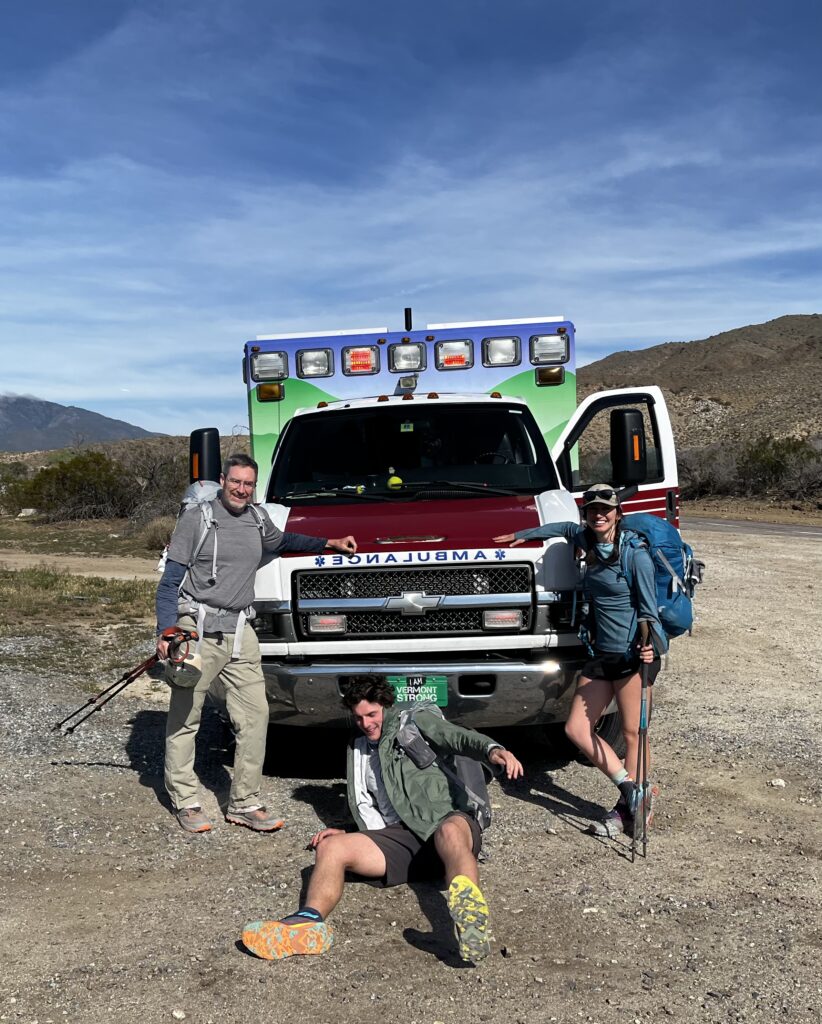
First hitch into town was in an old ambulance turned van
First real rattlesnake experience, more to come in the future
Changing scenery
After the first week in — let’s call it real desert — the scenery started to shift a little. We were climbing some hills… I don’t even know if you’d call them mountains, but it was interesting. Honestly, it was kind of funny, just going up. My body was slowly getting used to the new rhythm, the new endurance levels… but not really. It was hard. Really hard. And at the same time, it was exciting to see what’s coming next, to feel what the trail is going to teach me.
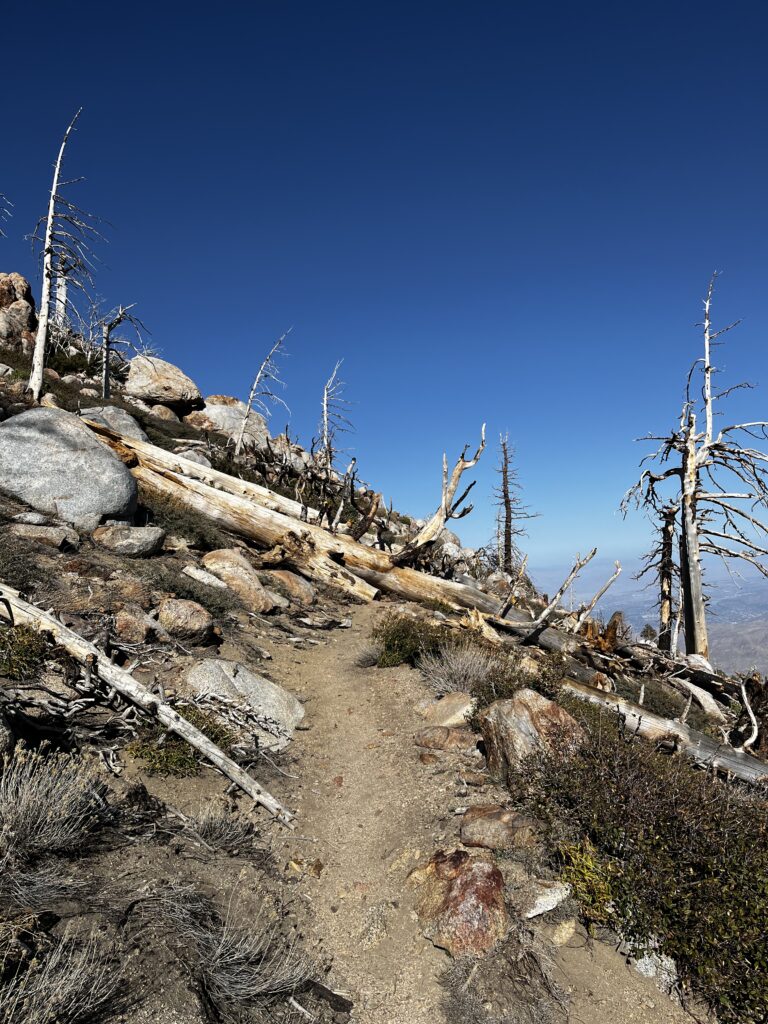
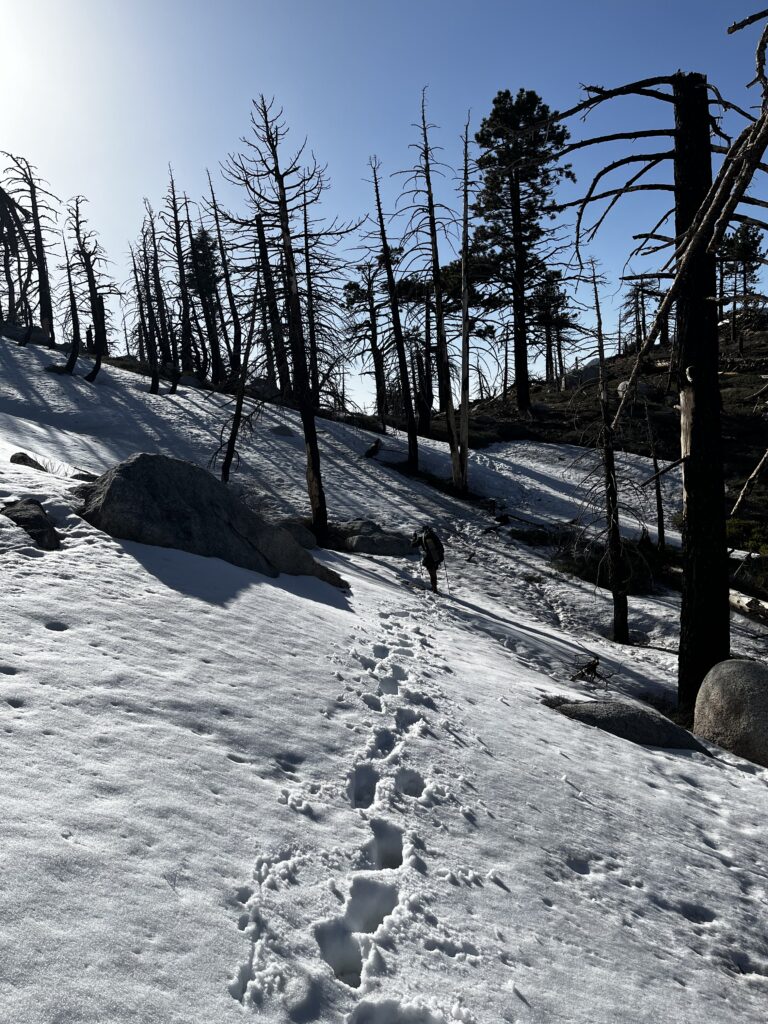
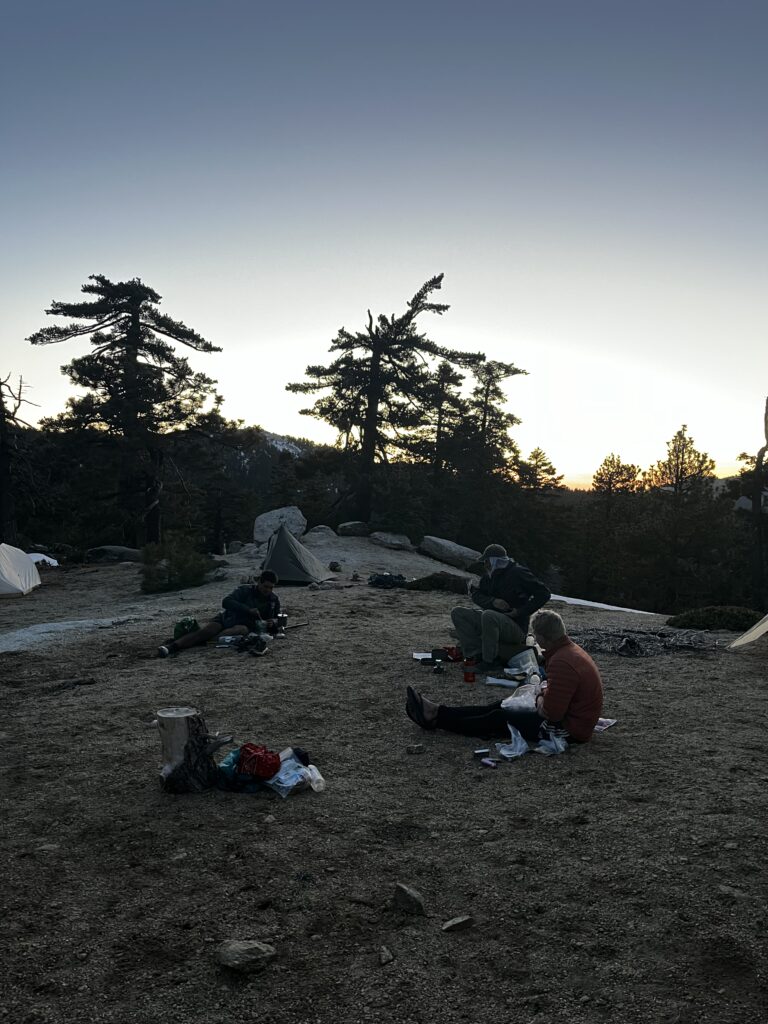
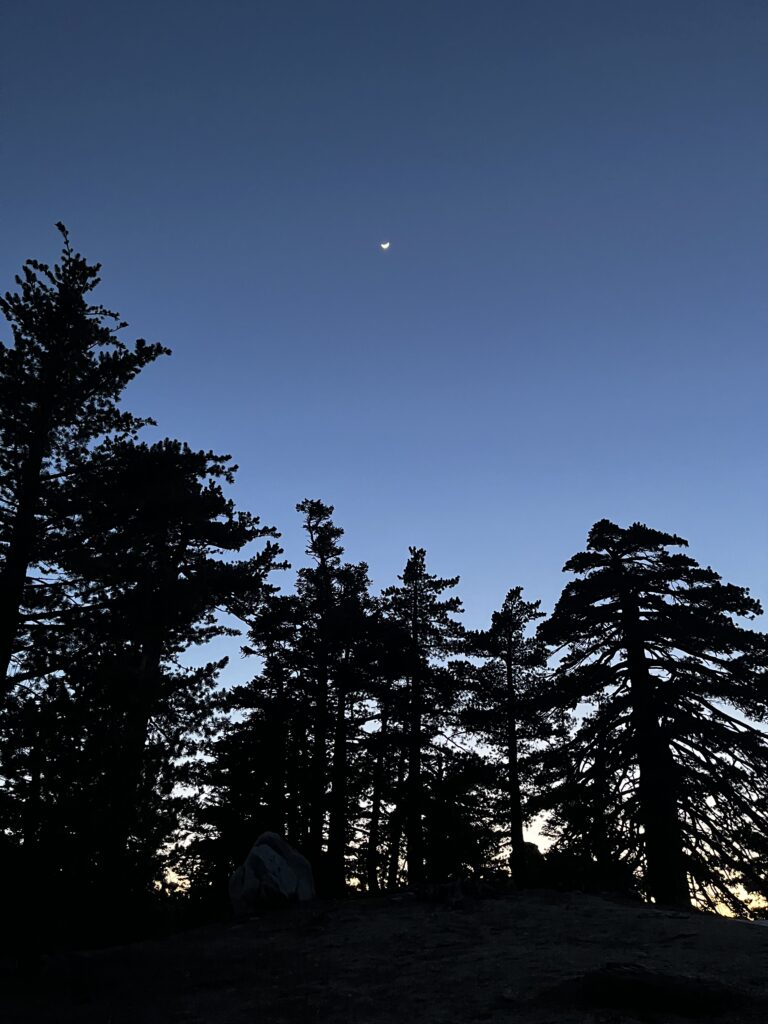
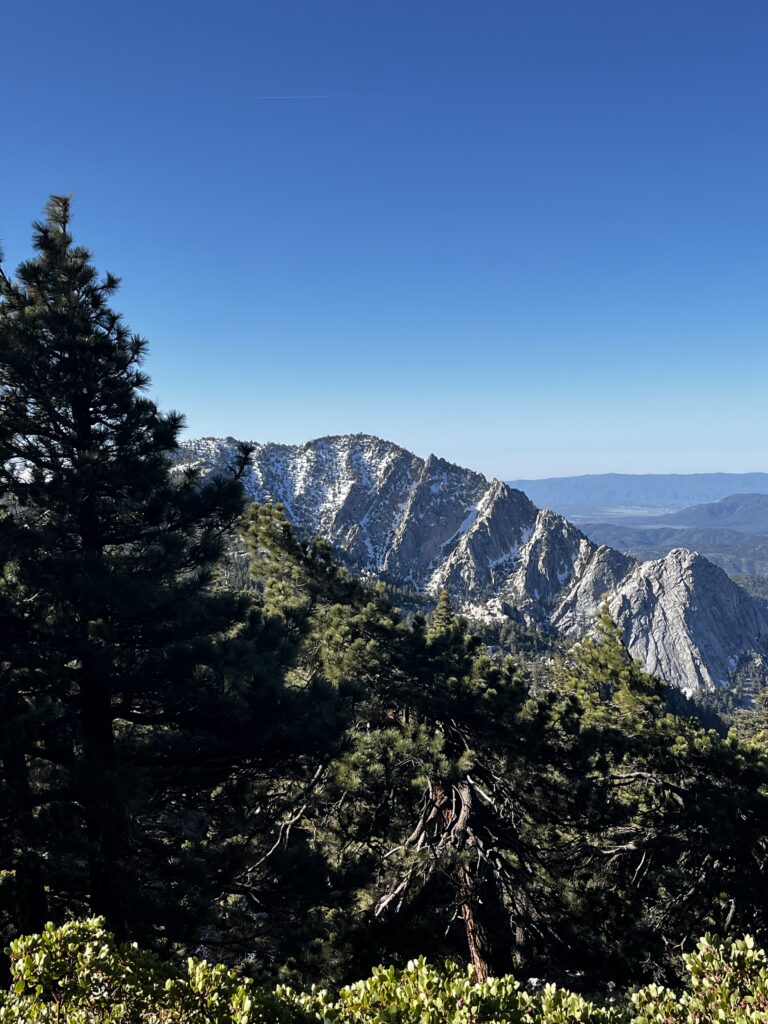
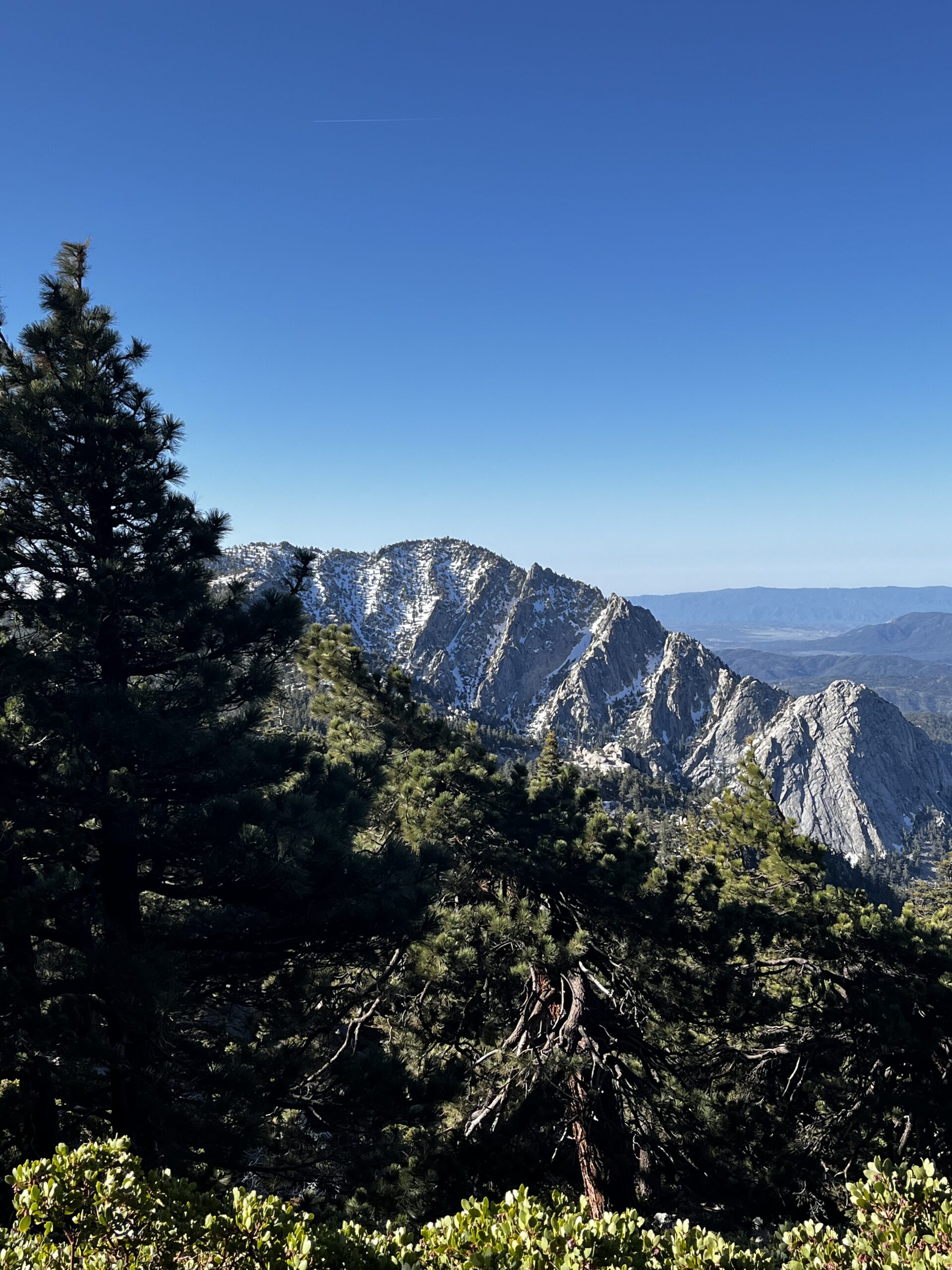
Later, when we ascended to the peak of San Jacinto, it was interesting to see that there was a lot of snow at the top. We were at 10,000 feet, so about 3,000 meters. At the same time, you could see the city of Palm Springs and the desert down below. Everything was dry. It made me realize that now we’d have to descend and cross it all. I’ve never seen that sort of contrast — from where we were to where we were going — and it was fascinating to take it all in.
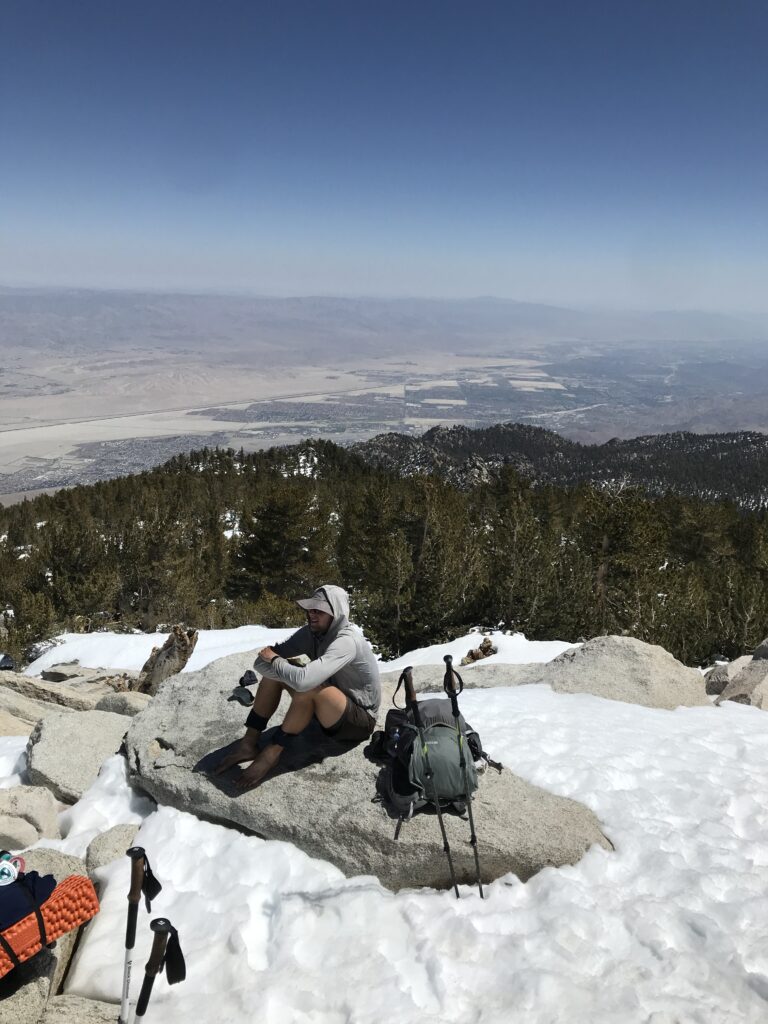
I learnt that sliding downhill is easier than trying to walk down
Something along the lines – red on black, your friend Jack, black on yellow – kill a fellow
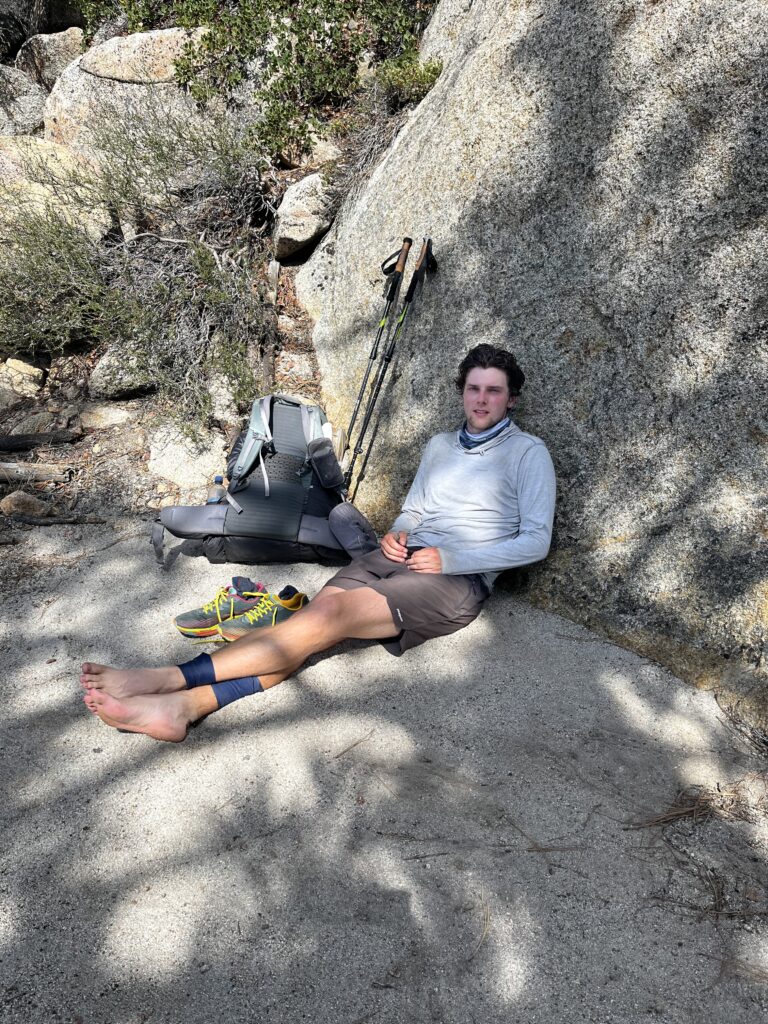
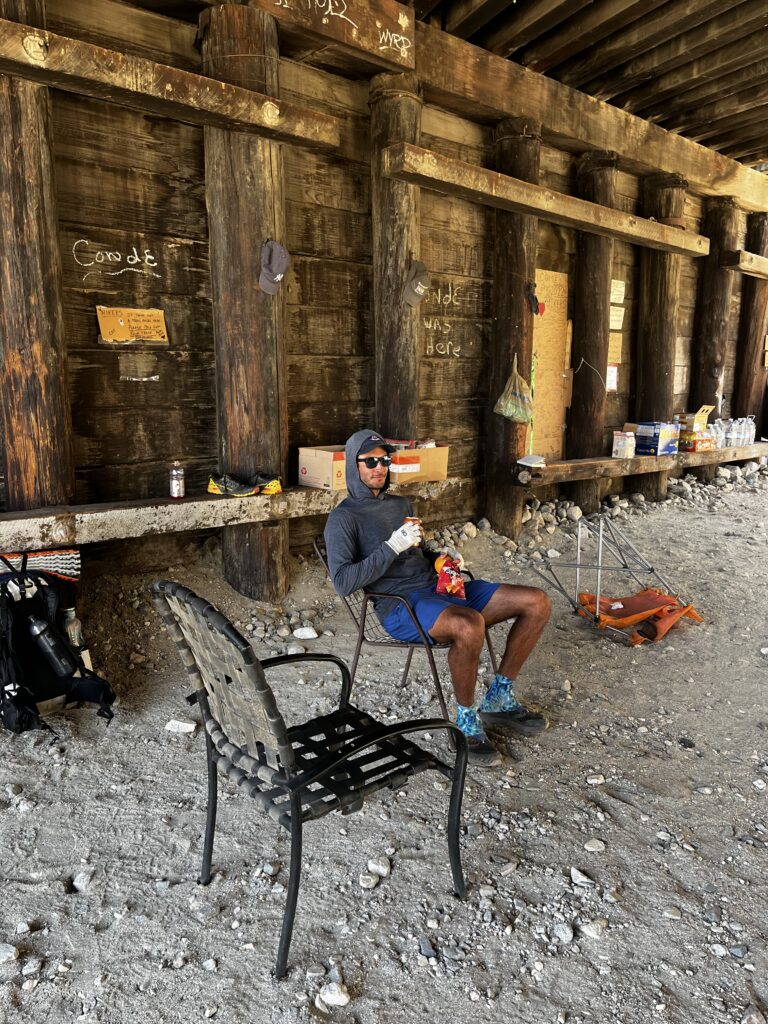
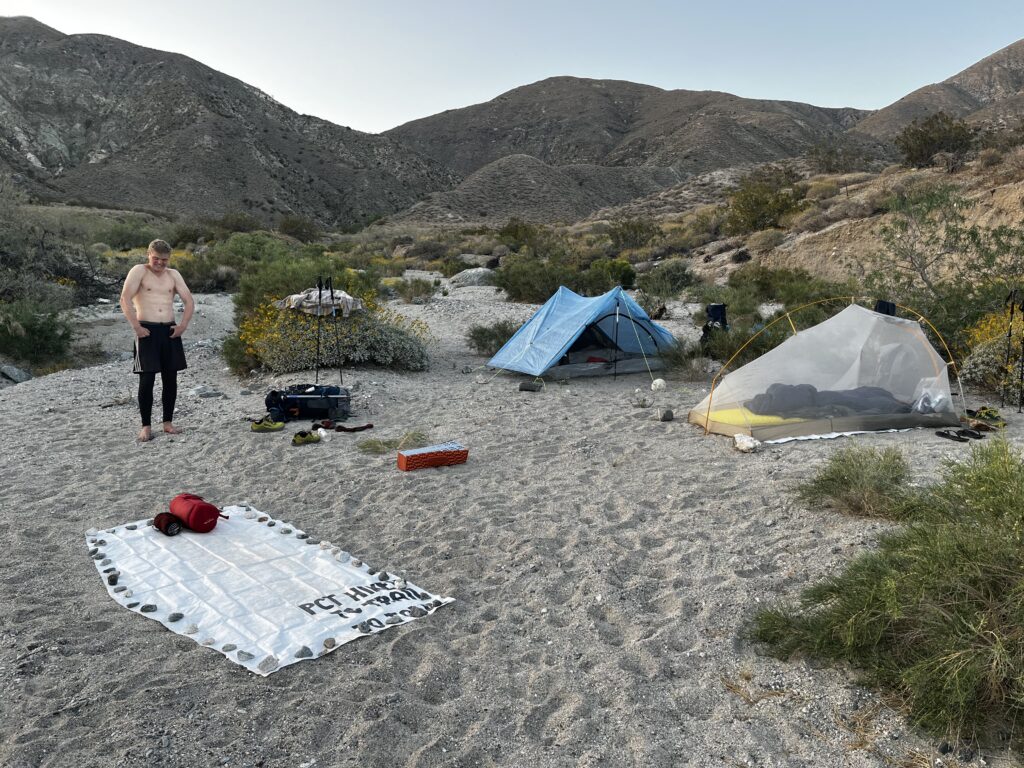
To finish it off, some random pictures from this first 1/3 of the desert section.
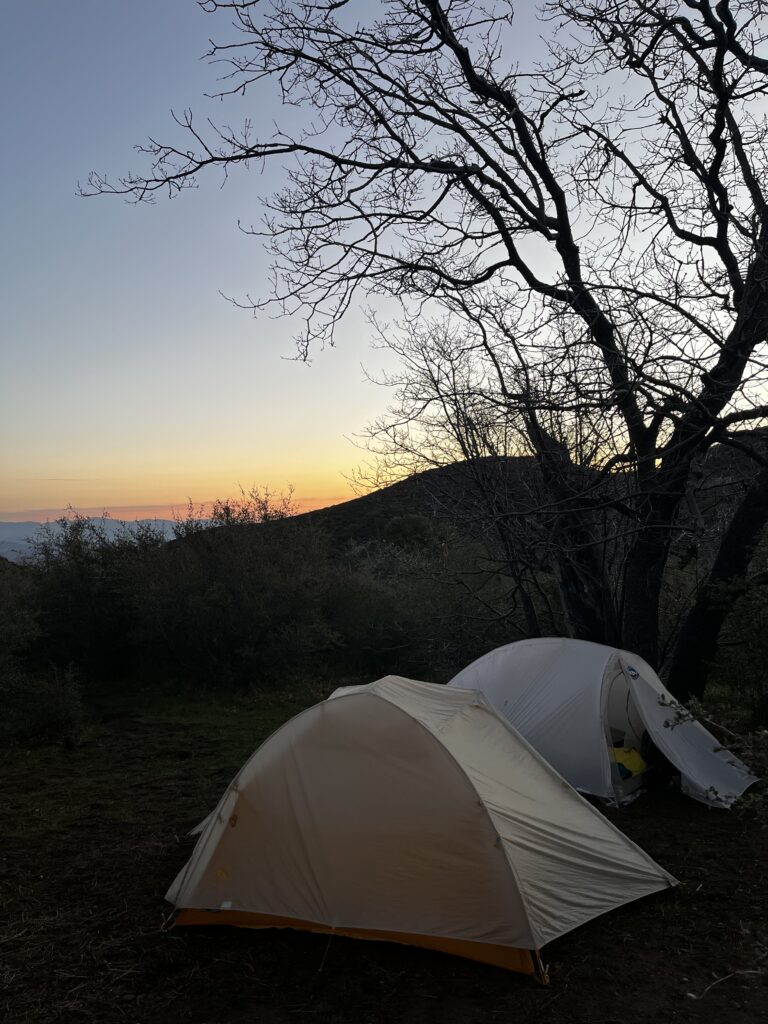
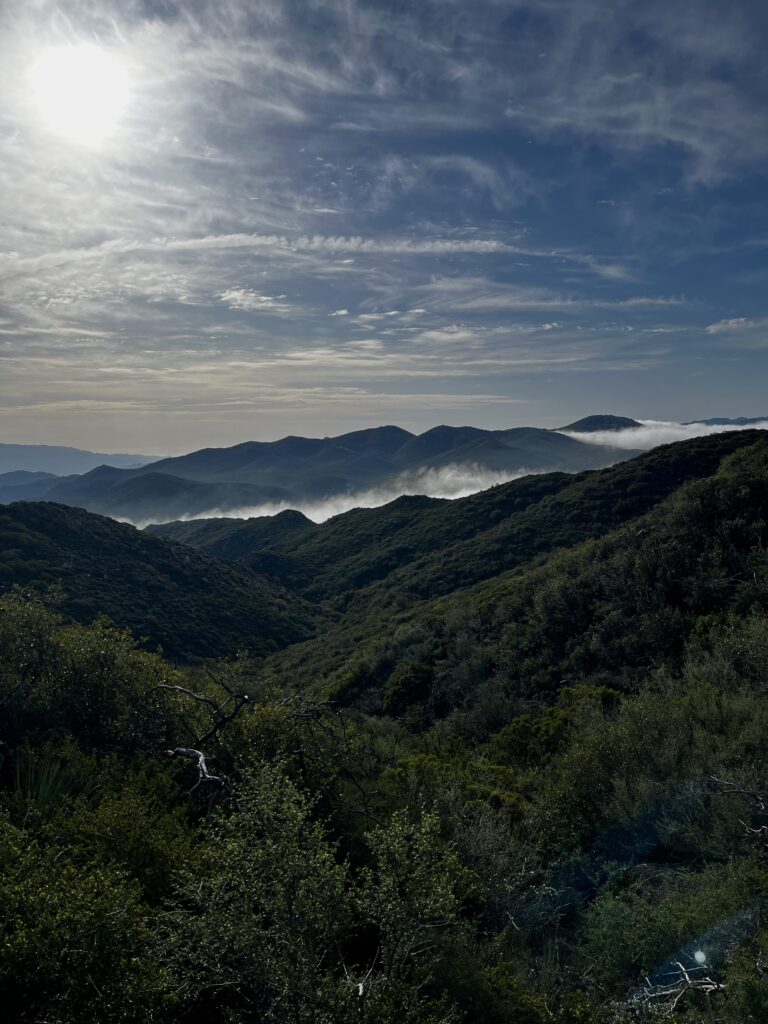
I have yet to shower….